“Put the phone down now, or you won’t fall asleep.”
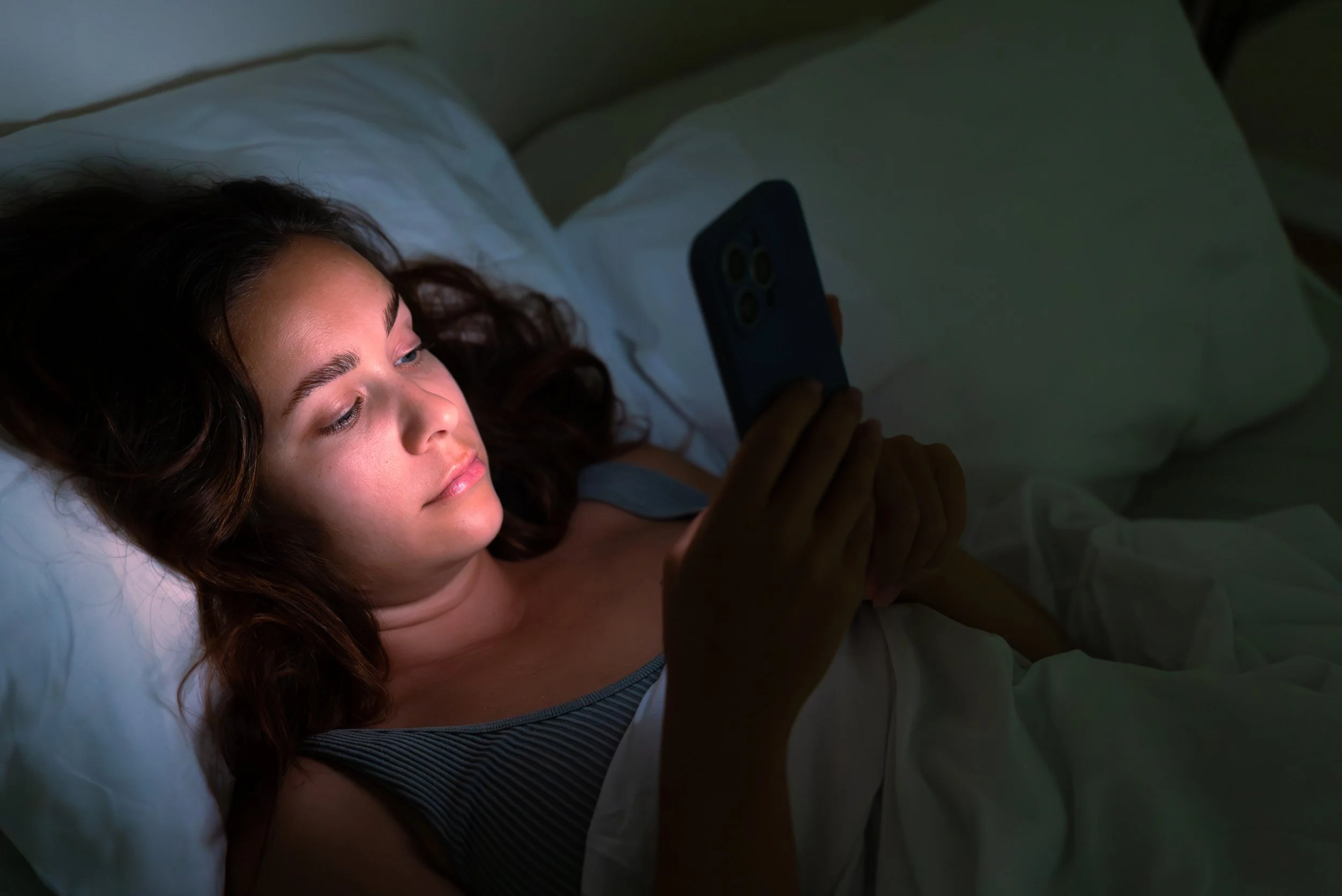
In fact, we’ve all heard about this, and parents have probably explained it to their children as well. In our fast-paced and constantly online society, smartphones, computers and other electronic devices play a major role. Studies have found that using bright screens one hour before going to sleep can have a negative impact on our ability to fall asleep and sleep quality.
The bright light from screens stimulates an area in our brain that keeps us awake.
Put simply, there are two areas of the brain responsible for sleep and wakefulness. One part is sensitive to light and keeps us awake, and the other part secretes the sleep hormone melatonin when natural light becomes dim. It is these areas that are responsible for our daily sleep-wake cycle.
However, the light spectrum of bright screens (LEDs and OLEDs) stimulates the waking area of the brain and delays the production of the sleep hormone. What’s more, what we consume from these screens can cause anxiety and adrenaline rushes, which in turn prevent us from relaxing and sleeping.
If you’re having trouble falling asleep, Silmalaser optometrist Gerli Jones suggests trying the following:
1. Stop using screens at least one hour before going to bed and do something relaxing, like reading a book.
2. If you still need to use screens, put them in “night-time” mode. This makes the phone screen less bright and more yellow.