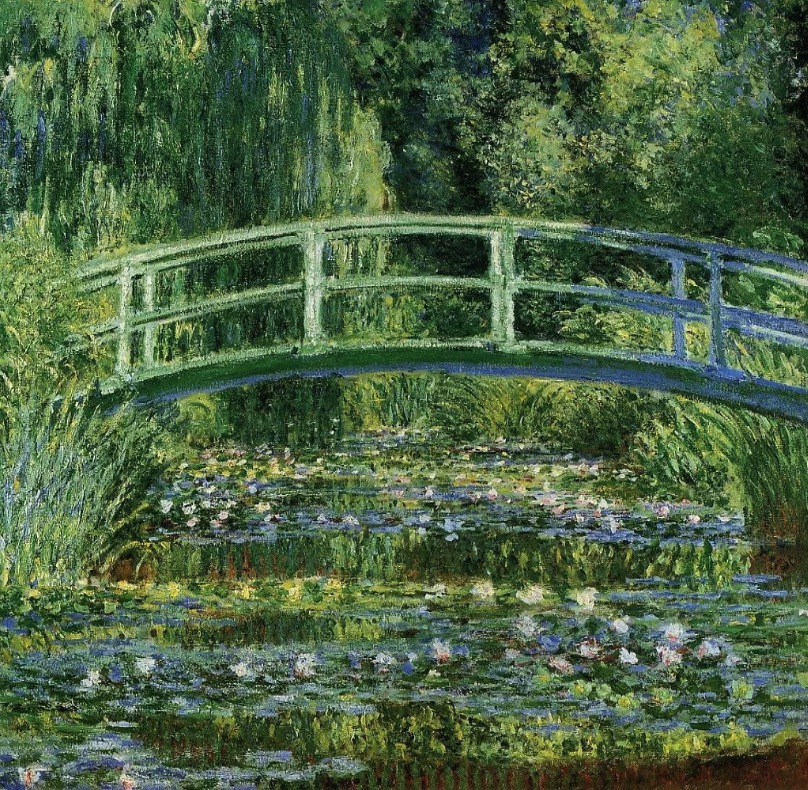
Throughout history, eye diseases have left their mark on the work of some of the world’s most famous artists. Eye diseases that blurred, distorted, or dimmed vision also altered the way artists perceived light, colour and form. Throughout time, this has influenced their unique style.
Which eye diseases have influenced the work of great artists, and how can creativity flourish even when vision starts to fade?
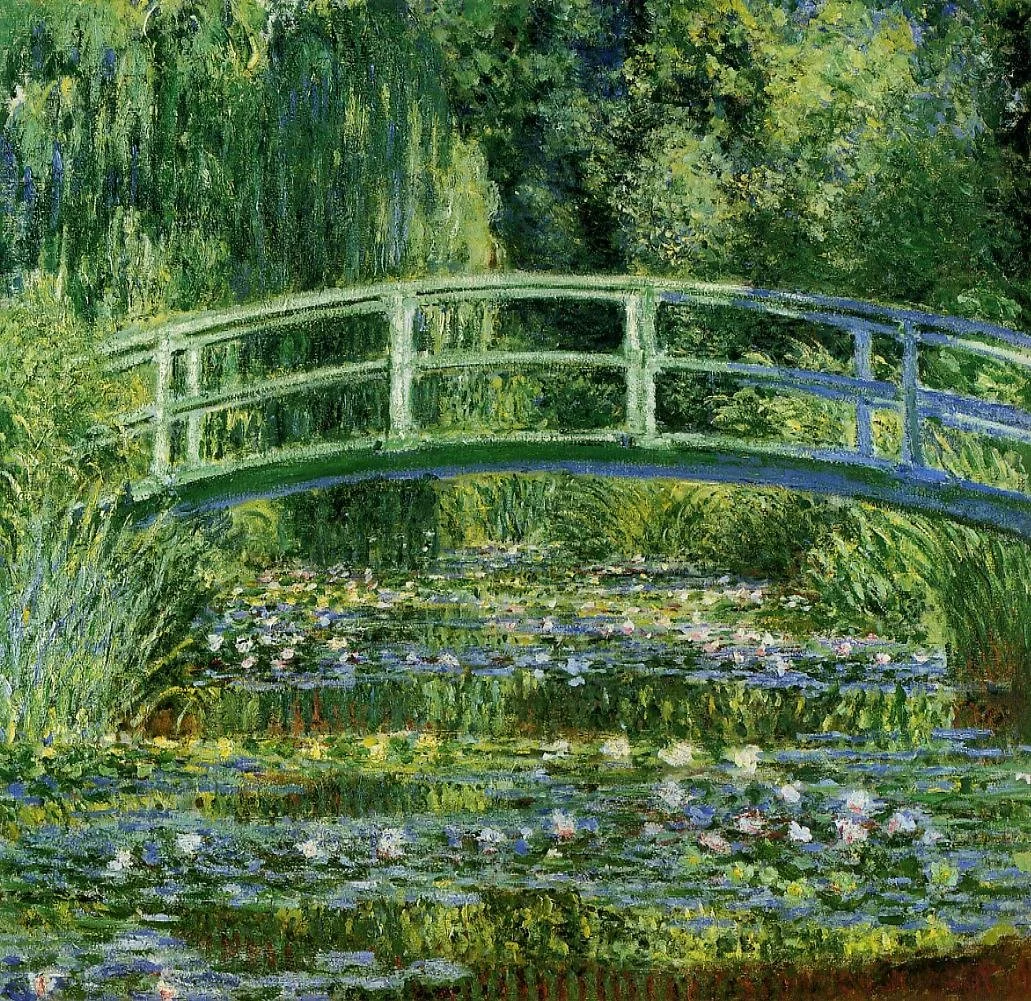
Cataracts – Claude Monet (1840–1926), French Impressionist
His increasingly blurred vision over time affected his sense of colour and detail. In later works, the tones became reddish brown and muddy blue, and the details disappeared. The most famous examples from this period are the Water Lilies series and the Japanese Footbridge. After an eye surgery, Monet’s vision partially recovered and his colour perception became clearer again.
Astigmatism (refractive error, not disease) – Amedeo Modigliani (1885–1920), Italian painter and sculptor.
Modigliani was not officially diagnosed with an eye disease, but it is thought that the elegant, vertically elongated and slightly angled figures that characterise his style may have been caused by astigmatism. Its influence can be seen, for example, in Jeanne Hébuterne in a Yellow Sweater.
Juvenile macular degeneration – Edgar Degas (1834–1917), French impressionist
Degas is thought to have suffered from hereditary macular degeneration, which affected his central vision in both eyes. As a result, his paintings became blurred and less detailed, and his sense of contrast and colour was weakened. He later focused more on sculpture and eventually went blind in one eye.

Age-related macular degeneration (AMD) – Georgia Totto O’Keeffe (1887–1986), American modernist.
In her seventies, O’Keeffe developed age-related macular degeneration, which affected the most clearly visible part of the retina. The disease slowly robbed her of the ability to see fine details and distinguish colours clearly, leaving only part of her peripheral vision intact. For some time, she used an assistant to help her mix the colours and create the composition. Later, before turning to sculpture, O’Keeffe painted what she remembered, not what she saw.
Vitreous floaters – Edvard Munch (1863–1944), Norwegian expressionist
At the age of 67, Munch developed a haematoma in the vitreous humour of his better-seeing eye, causing him to see floating shadows and spots in his field of vision. These so-called ‘floaters’ also found their way into his paintings.
Diabetic retinopathy – Paul Cézanne (1839–1906), French post-impressionist
Cézanne’s diabetes caused damage to the retina, resulting in a loss of visual acuity and colour blindness, particularly to shades of blue and green. His later works therefore became more abstract and modest in colour.
Inflammation of the lacrimal sac (Dacryocystitis) – Camille Pissarro (1830–1903), French impressionist
Pissarro suffered from chronic dacryocystitis, which prevented him from painting outdoors. He was forced to work indoors, looking out of the window and adapting his painting style to the new conditions.
Vogt-Koyanagi-Harada syndrome – Francisco Goya (1746–1828), French romanticist
At the age of 47, Goya likely developed Vogt-Koyanagi-Harada syndrome, or uveomeningoencephalitis, which affected his vision, hearing and balance. His earlier cheerful and colourful paintings were replaced by sad, melancholic and horrific scenes.